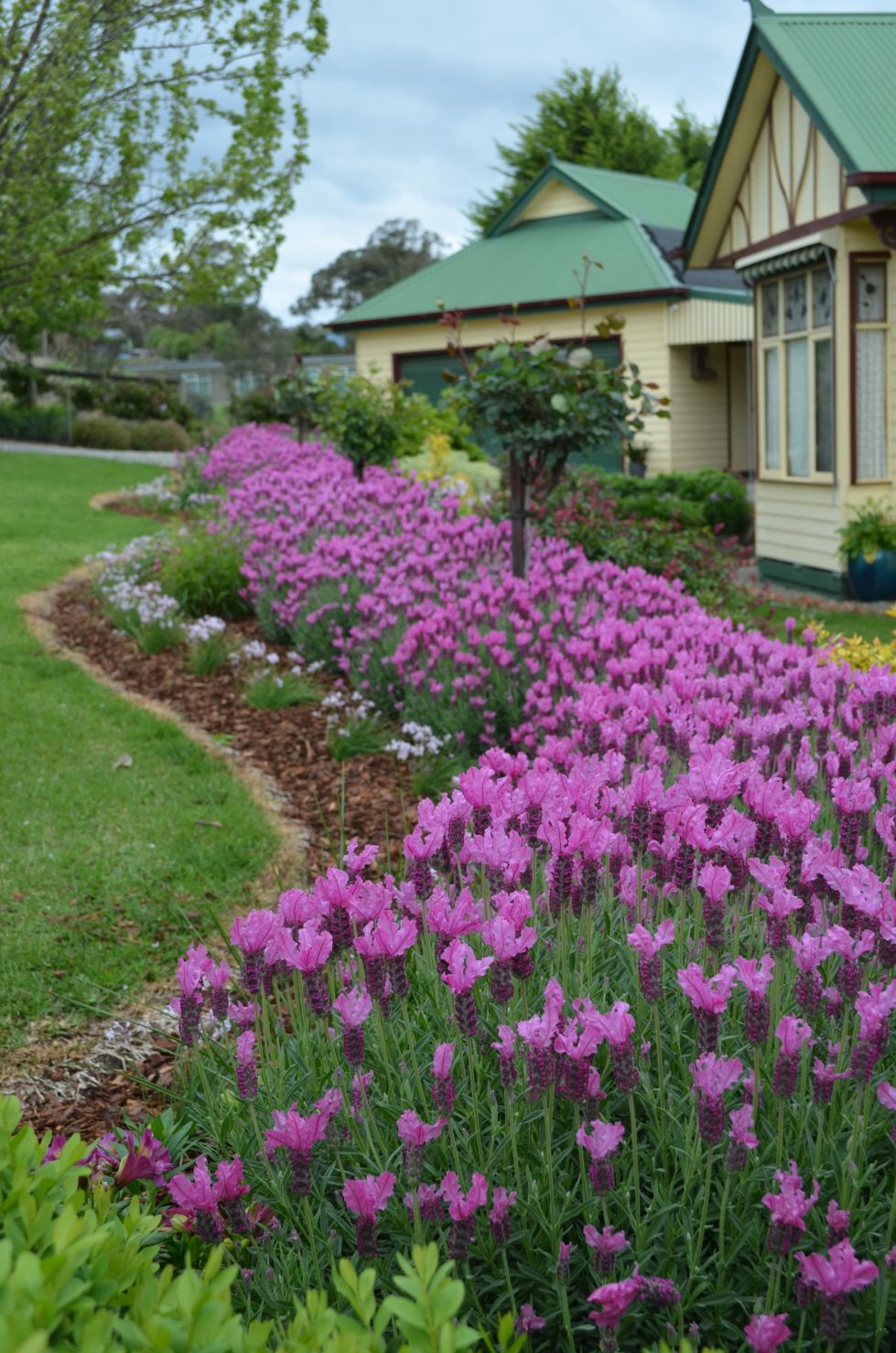
DEFINING BORDERS AND BOUNDARIES WITH FLOWERS ADDS SEASONAL INTEREST ANDHELPS OUR POLLINATORS
Buxus has its place, don’t get me wrong! But let’s get creative with those gardenboundaries.
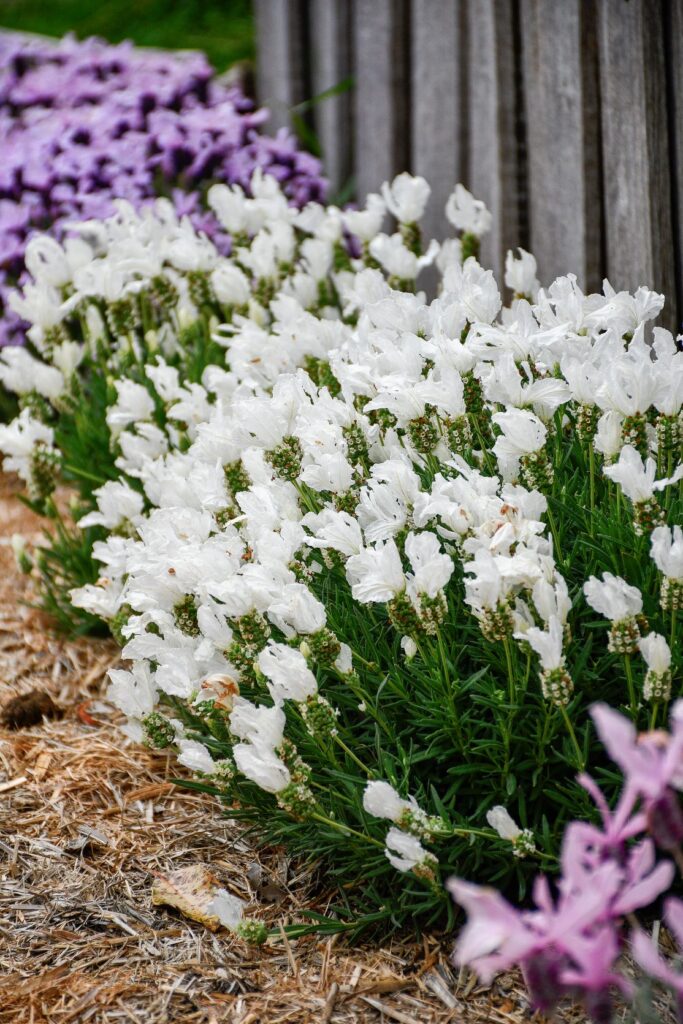
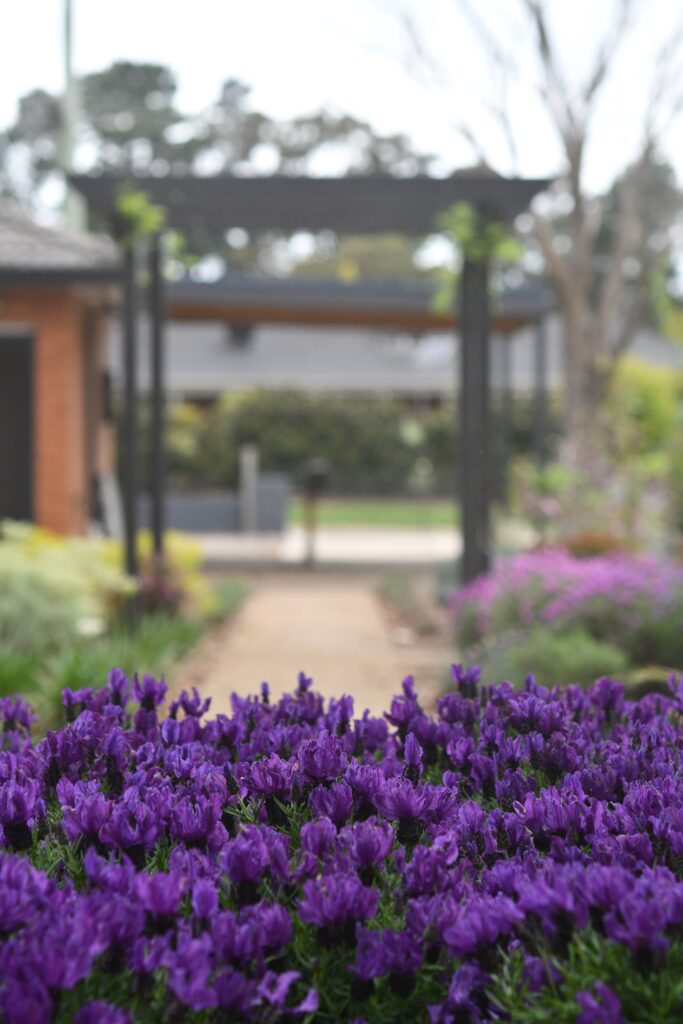
In a sea of shades of vibrant pinkto darkest mauve and purest white, the Spanishlavenders can light up the garden in spring through summer with a flowering performance that will stun visitors to your garden.
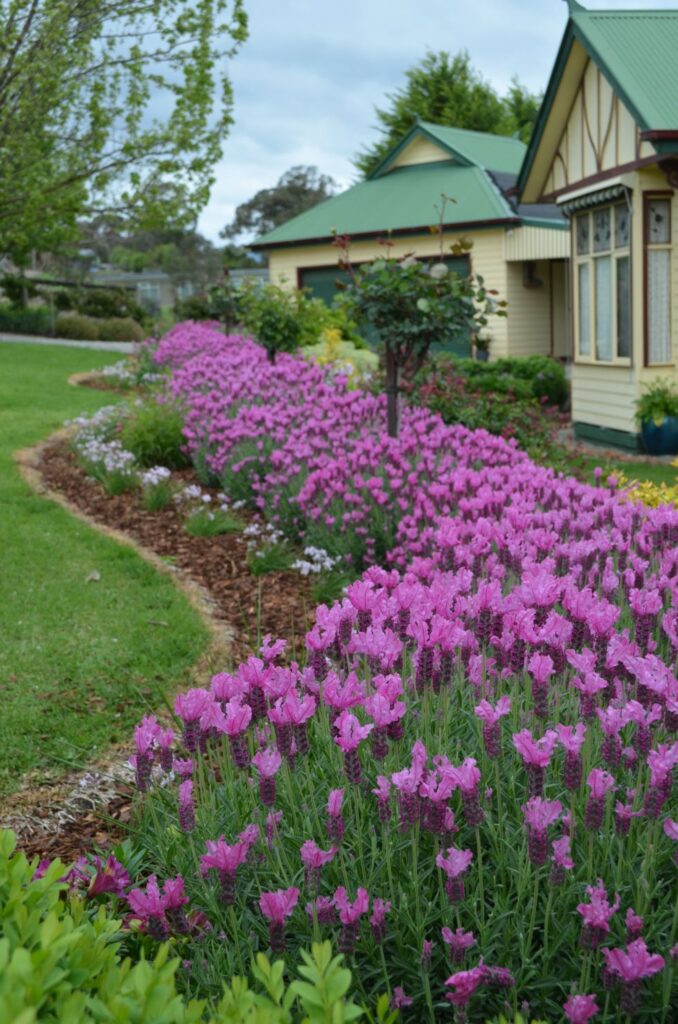
The latest in lavender breeding, the ‘Royal‘ Lavenders hold a good compact formandcan be trimmed as needed to create a colourful flowering hedge along pathways, wallsor fence lines. Naturally heat and dry loving mediterranean plants, they’ll require littlewatering and maintenance once established; a bonus for the time-poor gardener.
Extreme flower volumes in spring can create the impression that the entire hedge is onemass of colour, delighting bee visitors and other pollinators as a favourite source offood, and a wonderful habitat to hide in for insects and garden birds.
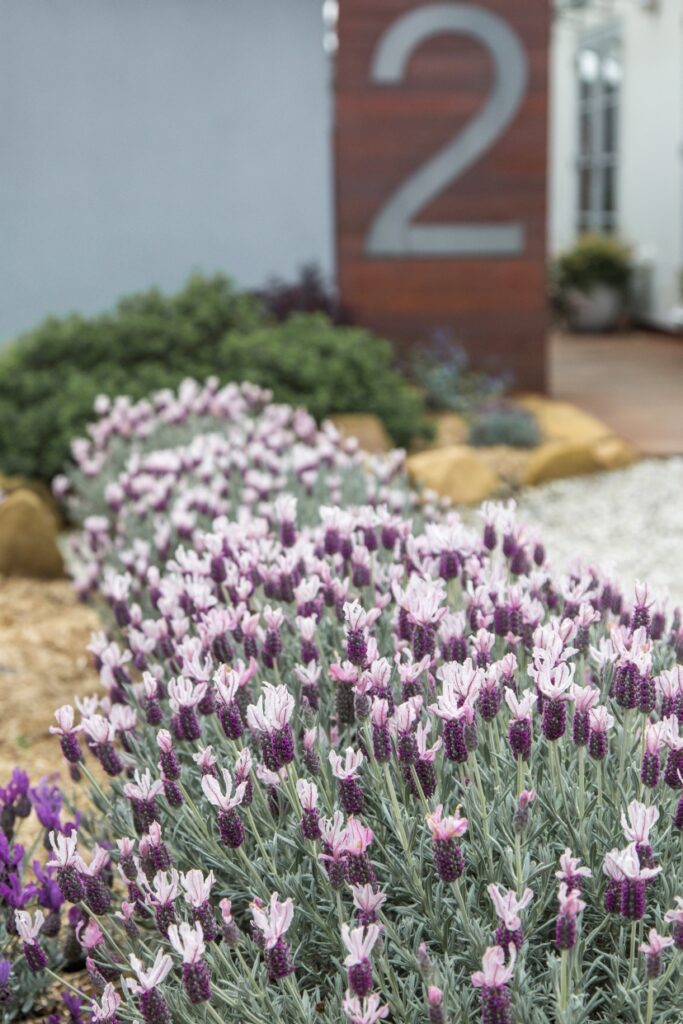
The most compelling of the many reasons to mass plant your lavenders is that they area sensory feast. Visually it’s impossible not to feel joy when you look at your gorgeous hedge, and as if that wasn’t enough there’s the fragrance and that irresistible urge toruna hand along those soft and fluffy lavender bracts or wings. Varieties like ‘The Princess Lavender’, ‘The Queen”,and the latest addition,‘The Prince’ have extra-large flowerbracts which are flowering superstars in the garden.
If white is your thing try a hedge of new ‘The Snow Princess’ with its abundance of purewhite flowers, or team up your favourites for a mixed-colour hedge of lavender along afence or garden wall that’s calling for the softening effect of masses of flowers but in atight space.
When the main show is over lavender foliage is naturally blue grey, which is a soothingand pleasing foliage colour that’s easy on the eye.
Planting a lavender hedge
Choose a sunny, well drained site
Mark out your line or curve of your hedge with pegs and string or a garden hose if youare creating a curved hedge
Work in lots of organic material or compost for good drainage. Gypsum is good for clayor compacted soils
Measure and mark evenly spaced planting positions at 40-50cm intervals (or closer foradwarf lavender, rule of thumb is the width less 10cm to ensure no gaps betweenplants)
Carefully plant each lavender in its assigned position keeping them perfectly even. It’shelpful to choose symmetrical compact young plants for best results
Water well and feed with a slow-release fertiliser to support plant establishment andoptimum flowering
Trim lightly little and often as needed